Signs You Might Need to See a Mental Health Professional
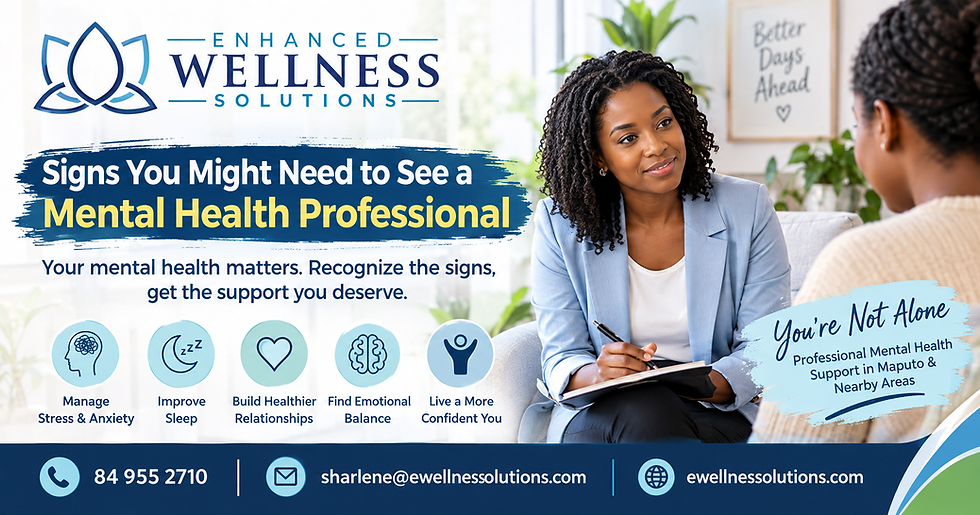
Common signs that it may be time to see a mental health professional include persistent changes in mood or energy, ongoing difficulty managing daily responsibilities, withdrawal from relationships or activities once enjoyed, changes in sleep or appetite, increased reliance on substances to cope, and thoughts of self-harm. If these patterns last for more than a couple of weeks or begin interfering with work, relationships, or daily functioning, speaking with a licensed professional can provide clarity, support, and an appropriate path forward. Enhanced Wellness Solutions provides professional mental health services throughout Maputo and nearby areas, offering a supportive, confidential space to work through these challenges with qualified guidance.
It's not always easy to know when everyday stress crosses into something that deserves professional attention. Many people wait far longer than necessary before reaching out for support, often because they're unsure whether what they're experiencing is "serious enough." The truth is, you don't need to be in crisis to benefit from speaking with a mental health professional. Below, we'll walk through common signs worth paying attention to, why early support matters, and what to expect from professional care.
Why Recognizing the Signs Early Matters
First, it's worth understanding why early recognition makes such a meaningful difference. Mental health challenges, much like physical health concerns, tend to be easier to address when caught early rather than after they've significantly impacted daily life. However, because symptoms often build gradually, it can be difficult to notice the shift from typical stress to something that warrants professional support.
Additionally, many people normalize ongoing struggles simply because they've become familiar. Consequently, checking in with yourself periodically, and paying attention to changes others may point out, can help you recognize patterns you might otherwise overlook.
Common Signs You Might Need Professional Support
While everyone's experience is different, here are some of the most common signs that professional support may be helpful:
1. Persistent Changes in Mood
Occasional bad days are a normal part of life. However, if sadness, irritability, anxiety, or a general sense of heaviness lingers for weeks rather than days, it may indicate something deeper worth exploring with a professional.
2. Difficulty Managing Daily Responsibilities
If tasks that once felt manageable, like going to work, maintaining household responsibilities, or keeping up with personal hygiene, start to feel overwhelming or get consistently neglected, this shift is worth paying attention to.
3. Withdrawal from Relationships and Activities
Pulling away from friends, family, or hobbies you once enjoyed can be an early sign that something isn't right. This withdrawal often happens gradually, which is why loved ones sometimes notice it before you do.
4. Changes in Sleep or Appetite
Significant changes in sleep patterns, whether that's sleeping far more or far less than usual, along with noticeable shifts in appetite, can both be connected to underlying mental health concerns.
5. Increased Reliance on Substances to Cope
Turning to alcohol, food, or other substances more frequently as a way to manage stress or emotions can signal that healthier coping strategies may be needed, ideally with professional guidance.
6. Persistent Worry or Racing Thoughts
Ongoing anxiety that feels difficult to control, or thoughts that seem to race without resolution, can interfere significantly with concentration, decision-making, and overall quality of life.
7. Physical Symptoms Without a Clear Cause
Headaches, fatigue, digestive issues, or muscle tension that persist without an obvious physical explanation can sometimes be connected to stress, anxiety, or other mental health factors.
8. Thoughts of Self-Harm
If you're experiencing thoughts of harming yourself or feeling like life isn't worth living, it's important to reach out for support as soon as possible, whether that's a mental health professional, a trusted person in your life, or a crisis support line. These feelings are treatable, and support is available.
When to Move from Noticing to Taking Action
It's natural to wonder how many signs, or how much time, should pass before reaching out. Generally speaking, if any of the signs above have lasted more than two weeks, or if they're beginning to affect your work, relationships, or ability to function day to day, that's a reasonable point to consider professional support. Trusting your own instincts matters here too; if something feels persistently "off," that feeling itself is worth taking seriously.
What to Expect From Professional Mental Health Support
Understanding what happens during professional support can help ease some of the uncertainty around taking that first step. Typically, the process includes:
An initial consultation – This first session focuses on understanding your current concerns, history, and goals for seeking support.
A collaborative approach to treatment – Rather than a one-size-fits-all method, effective mental health care is tailored to your specific needs and circumstances.
Ongoing sessions at a comfortable pace – Progress looks different for everyone, and a good professional works at a pace that feels manageable for you.
A confidential, judgment-free space – Professional mental health services are built around trust, giving you room to speak openly without fear of judgment.
Common Misconceptions That Prevent People from Seeking Help
Several misconceptions often keep people from reaching out sooner than they otherwise might:
"My problems aren't serious enough." Mental health support isn't reserved only for crisis situations; it's valuable for anyone navigating stress, transitions, or emotional difficulty.
"I should be able to handle this on my own." Seeking support is a sign of self-awareness and strength, not an inability to cope.
"Therapy takes too long to make a difference." While everyone's timeline varies, many people notice meaningful shifts in perspective and coping strategies within the first several sessions.
"People will judge me for going to therapy." Attitudes toward mental health support have shifted considerably, and confidentiality remains a core part of professional care.
Why Community and Cultural Context Matter in Maputo
For residents of Maputo and the surrounding areas, mental health support that understands local context, cultural values, and everyday realities can make a meaningful difference in how comfortable and supported someone feels throughout the process. Working with a provider familiar with the community allows for a more relevant, respectful approach to care, rather than a generic framework that doesn't account for local circumstances.
Why Choose Enhanced Wellness Solutions
Enhanced Wellness Solutions proudly serves Maputo and nearby areas with professional mental health services designed around compassionate, confidential, and individualized care. Whether you're noticing early signs of stress or anxiety, navigating a difficult life transition, or simply feel that something isn't quite right, our team is here to provide a supportive space where you can be heard without judgment.
We believe that reaching out for support is a meaningful step toward better wellbeing, not a last resort. If you've recognized any of the signs discussed above in yourself or someone you care about, Enhanced Wellness Solutions is ready to help you take that next step. Reach out today to schedule a consultation and begin your path toward better mental health.
Frequently Asked Questions
1. How do I know if what I'm feeling is normal stress or something more serious?
If your symptoms last more than two weeks or begin interfering with work, relationships, or daily responsibilities, it's a reasonable point to consider speaking with a mental health professional for clarity and support.
2. Do I need to be in crisis to see a mental health professional?
No. Mental health support is valuable for a wide range of concerns, from everyday stress and life transitions to more significant challenges. You don't need to wait until things feel unmanageable to seek help.
3. What happens during a first session with a mental health professional?
The first session typically focuses on understanding your current concerns, background, and goals, helping the professional recommend an appropriate, personalized approach to your care.
4. Is it normal to feel nervous about starting therapy?
Yes, this is a very common feeling. A good mental health professional creates a comfortable, non-judgmental space and works at a pace that feels manageable for you.
5. What should I do if I'm having thoughts of self-harm?
Reach out for support immediately, whether that's a mental health professional, a trusted person in your life, or a crisis support line. These feelings are treatable, and help is available.
Contact Us for Your Professional Mental health services in Maputo & Nearby Areas
Company Name: Enhanced Wellness Solutions
Address: Maputo & Nearby Areas
Phone: +258 84 95527 10
Visit Our Website: Click Here


Comments